

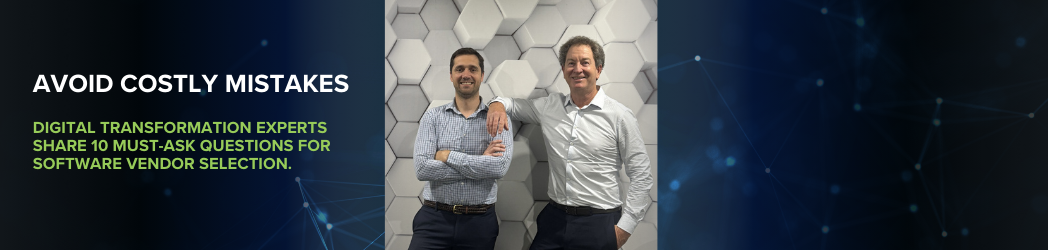
At Solution Minds Consulting (SMC), we’ve supported more than 700 transformation projects across Australia and New Zealand.
One pattern is consistent. Organisations that ask better questions make better decisions.
These 10 questions are designed to help you look past features and pricing, and assess whether a vendor can genuinely deliver business outcomes.
1. Do you understand our business strategy as well as our technical requirements?
Why it matters
A solution that fits technically can still fail if it does not support your long-term strategy, regulatory obligations, or operating model.
- How will this solution support our strategic priorities over the next 3 to 5 years?
- Can you share examples where your platform delivered measurable business outcomes?
2. How will this solution change our processes, structures, and ways of working?
Why it matters
Systems fail when process impacts are underestimated. You need to understand end-to-end process change, not isolated functionality.
- How do our current processes compare with best practice?
- Which processes must change for this system to work?
- Which processes cannot be supported without major configuration or data cleansing?
- Can you demonstrate how the solution supports our business-critical processes?
3. How will this solution impact our people and culture?
Why it matters
Technology only succeeds when people adopt it. Poor user experience creates resistance and workarounds.
- What is your approach to training and user adoption?
- How do you measure success beyond go-live?
- What support is available for different user groups?
4. How adaptable is your solution to industry and regulatory change?
Why it matters
Compliance, privacy, safety, and reporting requirements change regularly. Your system must evolve with them.
- How often is the platform updated, and how are updates delivered?
- Do you maintain industry or regulatory specialists?
- Can you share examples where clients adapted quickly to major change?
5. What is your integration and interoperability approach?
Why it matters
Most organisations operate in a multi-system environment. Poor integration increases risk, cost, and manual work.
- What integration options do you offer?
- How do you maintain data consistency across systems?
- Can you demonstrate integrations similar to ours?
6. What is your implementation methodology, and how do you manage risk?
Why it matters
Strong products still fail under weak delivery. Governance and risk management are critical.
- What frameworks guide your delivery?
- How do you identify, escalate, and mitigate risks?
- What is your track record for on-time and on-budget delivery?
7. How transparent will communication be throughout the project?
Why it matters
Lack of visibility leads to delays, cost blowouts, and poor decision-making.
- How often will progress be reported?
- Do we have access to dashboards or real-time data?
- How are scope changes communicated and approved?
8. What is the true cost of ownership over the next 3 to 5 years?
Why it matters
Licensing is only one component. Integration, support, scalability, and future change drive real cost.
- Can you provide a full cost breakdown?
- How do costs scale as we grow?
- What is included, and what is billed separately?
9. How do you define and guarantee success?
Why it matters
Go-live is a milestone. Success is sustained adoption and measurable value.
- What KPIs do you track?
- Do you provide performance or adoption commitments?
- How do you support clients after go-live?
10. What does long-term partnership look like, including data ownership and portability?
Why it matters
Your vendor should protect your data and enable a clean exit if required.
- What contract terms protect our data ownership?
- How can data be exported, and in what formats?
- What transition support is available if we leave?
- What does ongoing support look like after year one?
Final Thoughts
Vendor selection shapes the success of your transformation. The right partner reduces risk, improves adoption, and supports measurable outcomes.
SMC is independent and vendor-neutral. We support you from business case through implementation, ensuring every decision aligns with your strategy, your people, and your future operating model.
Book a Free Discovery Call to discuss how we can support your evaluation and delivery with clarity and confidence.
Frequently Asked Questions
What’s the best way to use these 10 questions in a real selection process?
Use them to shape your evaluation criteria before you shortlist. Then map vendor responses to scored requirements, risks, and total cost assumptions.
What should we ask for as evidence, not opinions?
Ask for examples tied to outcomes, not screenshots. Request references in your industry, a sample project plan, governance artefacts, and a clear breakdown of what is included versus billable.
How do we stop a demo from becoming a sales performance?
Give vendors scripted scenarios based on your real processes and data. Score the demo using a structured rubric, and keep time for “how it works in practice” questions like exceptions, approvals, and reporting.
What usually drives the real cost overrun?
Integration complexity, data quality remediation, change management, and scope creep. These costs often sit outside licensing and only show up once delivery starts.
What should we include in a realistic total cost of ownership view?
Licensing, implementation, integrations, reporting, data migration, training, ongoing support, internal backfill, future upgrades, and the cost of compliance change. Then model how costs scale with users, sites, or transactions.
How do we reduce vendor lock-in risk?
Confirm data ownership in the contract, define export formats and timeframes, document integration architecture, and include transition support obligations. Make exit planning part of procurement, not an afterthought.
When should we bring in an independent advisor?
If the decision is high-risk or business-critical, involve an advisor before shortlist. It helps you set evaluation guardrails, run an evidence-based process, and negotiate terms that protect delivery outcomes.